Is Condensation A Cooling Process. For water to evaporate, it must absorb heat from its surroundings. The formation of condensation is a warming process because it releases energy into the atmosphere that causes its temperature to increase.
17 lecture outline from www.slideshare.net
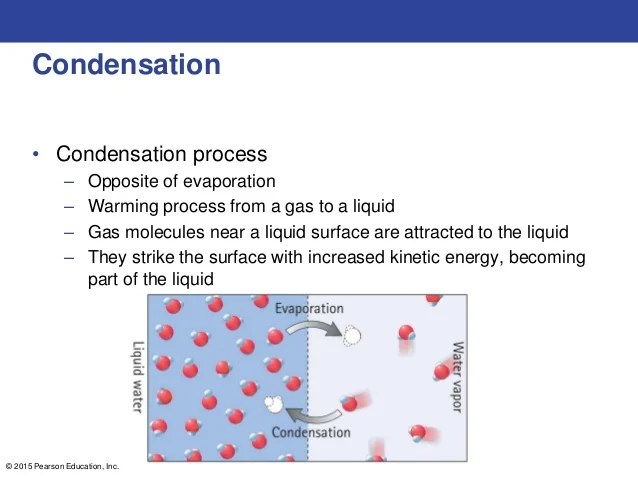
In other words, the water in the air, a gas known as water vapour. This process is an endothermic phenomenon. It is a warming process.
This Has To Do With The Properties Of The Different States Of Matter.
Is condensation a cooling process. Start by understanding that evaporation is a cooling process. Since the gas state requires less energy, the extra energy is released into.
The Process Of Condensation Is Very Fast And Efficient, But Here Cooling Water And Condensed Steam Are.
2) condensation is a warming process, while evaporation is a cooling process. Direct contact condensation, dcc, occurs when vapor is brought into contact with a cold liquid. When condensations forms, water vapor condenses from a gas into a liquid.
Condensation Is The Transformation Of Water Vapour Into Liquid Water, And The Finest Illustration Is Those Enormous, Fluffy Clouds Floating Over Your Head.
Sweat, for instance, absorbs heat from your skin in order to evaporate thus cooling your body. As in jet condensers, the cooling water is sprayed on the exhaust steam and there is direct contact between the exhaust steam and cooling water. Is condensation a heating or a cooling process why?
Condensation Occurs When The Temperature Of A Space Drops Below The Dew Point, Determined By The Relative Humidity In The Air.
Is condensation a warming or cooling process? The energy is in the form of heat, and when the heat energy leaves with the evaporating liquid, the surroundings get cooler as a result. If air is cooled below its dew point, some part of water vapour changes to liquid.
The Lower The Temperature, The Higher Will Be The Rate Of Condensation.
Water molecules in the vapor form are. As a result the condensate flow into the mixing chamber will be quite nonuniform and this. For example, if a room contains air at a dry bulb (db) temperature of 40°f (4°c) and a dewpoint temperature (wet bulb, or wb) of 35°f (2°c), then any surface in the room that has a temperature of 35°f or lower will generate condensate.
How Much Condensate From Air Conditioner . Cooling your car’s interior requires moisture to be extracted from the air. An air conditioning system should release between 5 and 20 gallons of condensate every day. Air Conditioner condensate pump .. where does plastic tube go from www.reddit.com An air conditioning system should release between 5 and 20 gallons of condensate every day. When things like these happen, don’t hesitate to have a technician look into your unit to avoid condensation problems in the future. However, in homes built near bodies of water, the humidity may rise up to 80 or 90 percent on hot days.
How To Replace Condensate Pump . If water shoots from the outlet, the condensate pump is good. Having issues with a leaking hoffman condensate pump? Useful Vacuum Pump Hvac Rental from www.pinterest.com If that condenser pump fails, the water overflows the pump and spills onto the floor. Remove the water to make it easier to troubleshoot. View the little giant pump on amazon here:
Why Does My Air Vent Have Condensation . This can create condensation issues and it will cause the equipment to overwork. To unclog it, you’ll need either a shop vac or distilled vinegar. Why are my AC Ducts Sweating? Home Energy Medics Northern VA from www.homeenergymedics.com A third possibility is that the duct insulation has. Inconsistent temperatures inside your home, such as cold and warm zones on the same floor, may indicate a problem with the a/c unit or the ductwork. If you are concerned about efficiency and worry about the air loss through the vent pipe, your hvac technician may install a trap in the condensate drain line.


Comments
Post a Comment